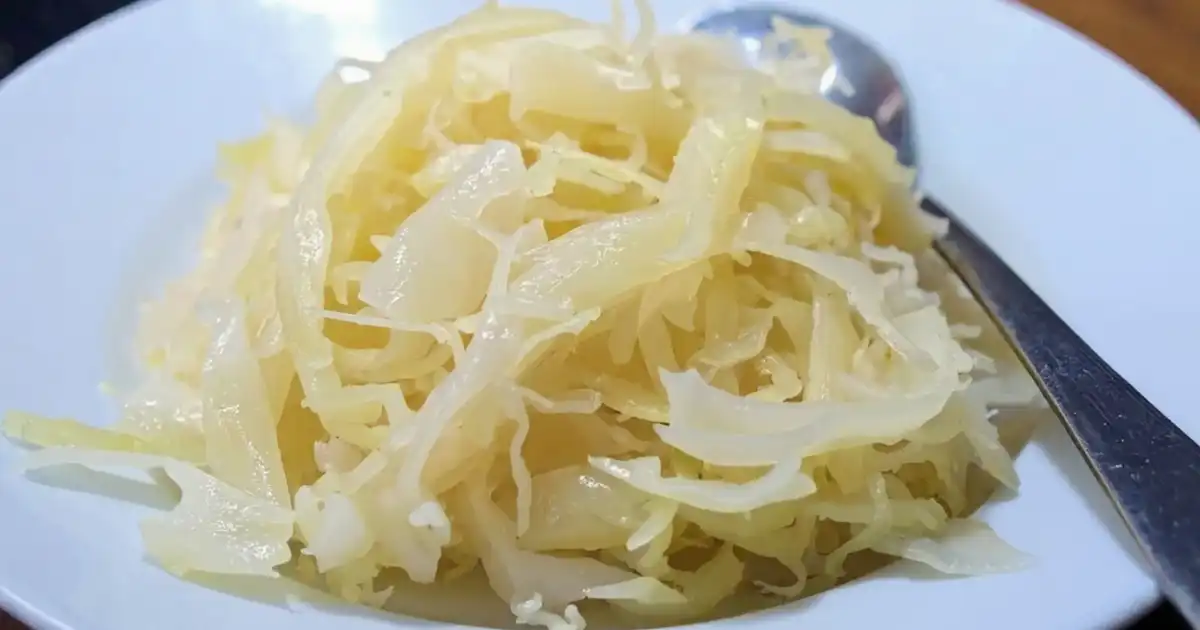
Fermented cabbage (or sauerkraut) is a simple fermented dish: just shredded green cabbage and salt, packed into a jar and left on the counter for about a week.
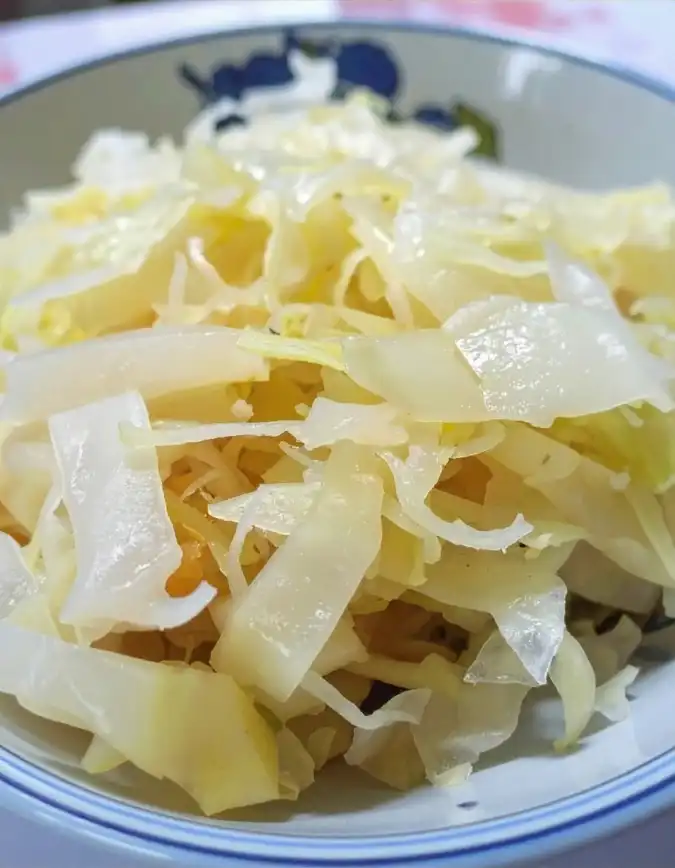
Originally from Central and Eastern Europe, sauerkraut has become a staple worldwide. It’s crunchy, salty, tangy, and slightly funky in the best way. It’s also celebrated as a probiotic powerhouse: great for gut health, digestion, and immunity, as long as it’s raw and unpasteurized.
Table of Contents
Fermented Cabbage Recipe
Key Ingredients
Green cabbage: A fresh, dense head of green cabbage is all you need for the base. The tighter the head, the crunchier the final sauerkraut. Loose, leafy heads have too much air between the layers and don’t pack down well into the jar. Look for heads that feel heavy for their size.
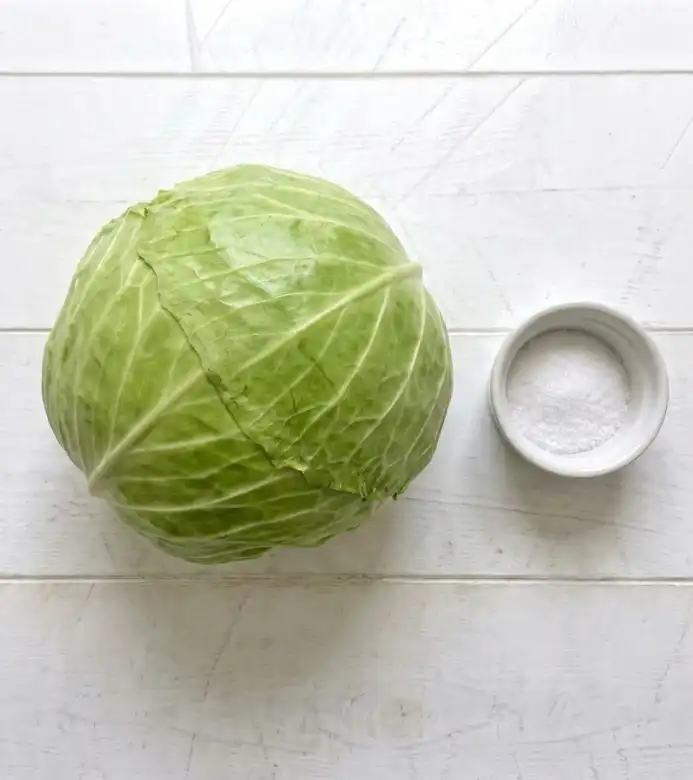
Fine sea salt: Salt draws water out of the cabbage to create the brine, and it controls which bacteria grow during fermentation. I use fine sea salt because it dissolves evenly into the cabbage. Never use iodized table salt because the iodine kills the beneficial bacteria you’re trying to cultivate.
Tips to Make It Perfect
Massage the cabbage until it’s swimming in its own liquid: This is the most important step. You need enough brine to fully submerge the cabbage in the jar. I squeeze and knead for a full 8 to 10 minutes and by the end the bowl has a pool of liquid at the bottom. If you stop too early, there won’t be enough brine and the top layer will be exposed to air.
Keep the cabbage submerged at all times: Anything above the brine line is exposed to oxygen and that’s where mold grows. Press it down every single day and top off with a little salted water if the level drops. One forgotten day won’t ruin it but consistency is how you get a clean ferment.
Start tasting on day 5 and stop when you like it: There’s no single correct fermentation time. After 5 days it’s mildly tangy, after 7 days it has a proper sour bite, and after 14 days it’s deeply funky and complex. I pull mine at day 7 because that’s the balance I like, but your kitchen temperature and taste preference will be different.
Use a clean jar and clean hands every time you touch it: Fermentation relies on specific bacteria doing their job. Wash the jar with hot soapy water, rinse well, and make sure your hands are clean before every check.
Check out this simple fermented cabbage recipe here:
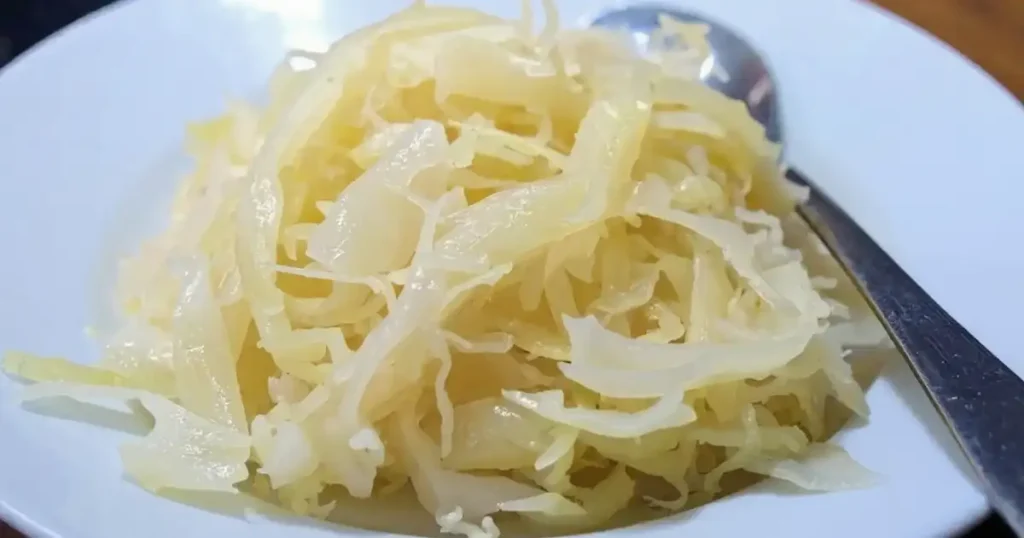
Fermented Cabbage
Simple homemade sauerkraut made with just cabbage and salt. Tangy, crunchy, and full of natural probiotics after a week of fermentation on the counter.
Ingredients
- 1medium head green cabbage (about 2 lbs)
- 1 tablespoonfine sea salt
Instructions
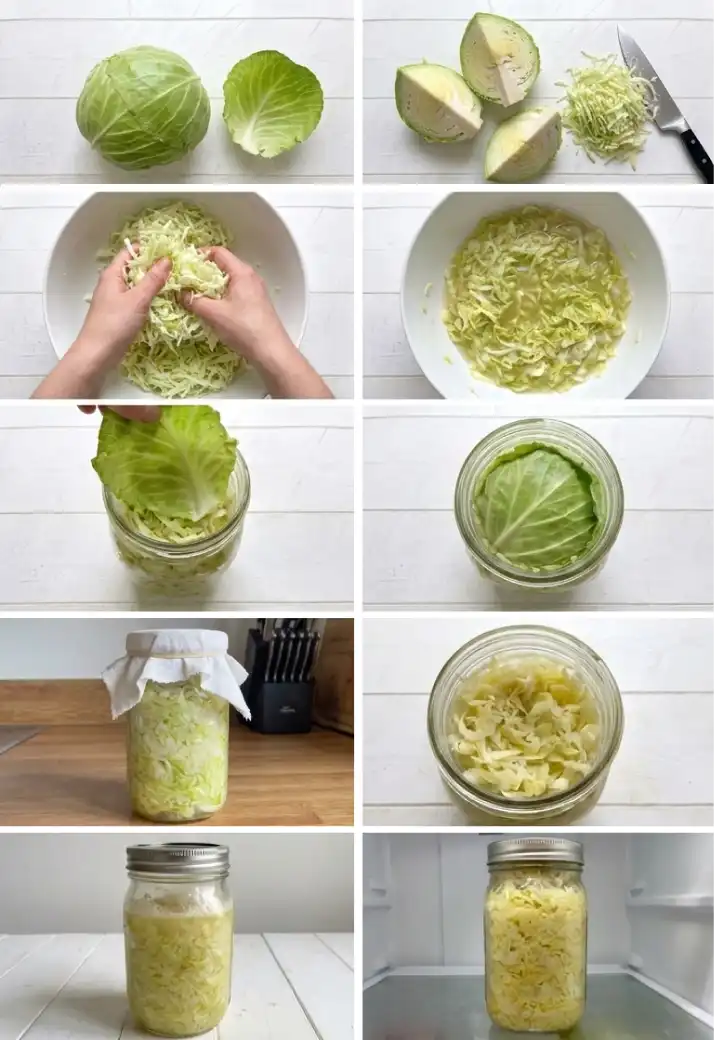
- 1Remove the outer leaves of the cabbage and set one aside. Quarter the cabbage, remove the core, and shred it thinly with a knife or mandoline.
- 2Place the shredded cabbage in a large bowl and sprinkle the salt over it. Massage and squeeze the cabbage with your hands for 8 to 10 minutes until it releases enough liquid to submerge itself.
- 3Transfer the cabbage and all its liquid into a clean quart-sized mason jar. Press it down firmly with your fist or a tamper so the brine rises above the cabbage.
- 4Place the reserved outer leaf on top and press it down to keep the shredded cabbage submerged below the brine.
- 5Loosely place the lid on the jar or cover with a cloth secured with a rubber band. Do not seal tightly as gas needs to escape.
- 6Leave at room temperature out of direct sunlight for 7 to 14 days. Press the cabbage back down daily and taste after day 5.
- 7Once it reaches your preferred tanginess, seal the jar and refrigerate.
Nutrition per serving
📌 Notes
- Use fine sea salt, not iodized table salt. Iodine can interfere with the fermentation process.
- The cabbage must stay submerged below the brine at all times. Anything above the liquid can mold.
- Taste it daily starting around day 5. Warmer kitchens ferment faster, cooler ones take longer.
- A properly fermented batch keeps in the refrigerator for up to 6 months.
- If you see white film on the surface, skim it off. The cabbage underneath is still fine.
How to Pair
Fermented cabbage is sour, salty, and crunchy. It cuts through rich and fatty foods with its sharp, tangy bite. Here are some options you can pair with:
- With meats, it is classic next to grilled sausages, pork chops, or slow-roasted pork shoulder.
- On sandwiches, pile it onto a reuben, a bratwurst in a bun, or any deli sandwich that needs acidity and crunch.
- In bowls, a forkful on top of rice bowls, grain bowls, or even scrambled eggs wakes the whole plate up.





Leave a Reply